why-open-source-matters
Why Open Source Matters
This started as an outline from a talk at a Mozilla event. The assigned topic was “Why Open Source Matters” but this is still not something that I have figured out very well yet.
In the process of adding some links I have changed it around some, so it needs more work in order to hang together as a talk.
Before reading, please view the “Coffee Achievers” commercial if possible.
Warning
This is OFF MESSAGE. This does not represent any official Mozilla position.
Prehistoric open source
BSD “Net/1” 1989
X Window System 1987
GNU Emacs 1985
LaTeX 1982
Pre-prehistoric open source
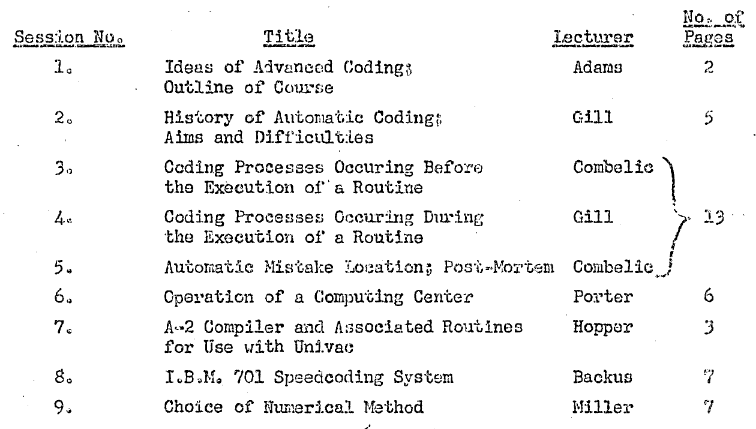
The A-2 System (early compiler)
UNIVAC division of Remington Rand
SHARE (IBM user group)
Today: Three movements
Software development methodology
Internet freedom campaign
Economic movement
Everyone who is trying to sell you on joining “open source” is selling a different combination of the above.
Open Source is the new “coffee achievers”
Are there really people who self-identify as “coffee achievers” who work in many different fields including music, literature, and the theater? Maybe, or maybe not. But somebody is selling them coffee. The same goes for the “open source community.” Who’s getting paid to get you to “join”, and what is their motivation?
Some of the communities of practice that use Free Software licensing are a big win for their participants, and some, not so much. Instead of looking at the situation as a “cultural” one, it’s more important to look at what you’re being asked to do, and who benefits. You decide whether to drink a cup of coffee based on how good it is and how it will affect you, not on whether or not you’re part of a culture or movement.
Open source is a common set of licenses and practices. Not a common set of values or goals.
Non-reciprocal licenses

Reciprocal DFSG-Free licenses

------THE DIVIDING LINE------

Just Like a Book

No Reverse Engineering (typical EULA)

No Independent Implementation (algorithm patents)
Richard M. Stallman’s personal ethical line → 4 Freedoms of Free Software → Debian Free Software Guidelines (later branded as Open Source Definition)
(personally, my own dividing line is somewhere around “Just Like a Book” licenses, but The GNU Project communicated about this stuff so persistently and consistently that we now have two categories.)
Built on that one set of norms, three movements.
the three movements, in pull quotes
“In short, the effect on security of open source software is still a major debate in the security community, though a large number of prominent experts believe that it has great potential to be more secure.”
“My free software will respect users or it will be bullshit”
“Linux Foundation certifications give you a way to differentiate yourself in a job market that’s hungry for your skills.”
Three movements—the good news is that open source fails hard at all of them.
Fail: software quality
Fail: Diversity and inclusion
Fail: Compensation and burnout
Bugs part 1: winning in the 1990s
Sun, IBM, SGI, DEC, and NEXT: 15-43% of standard UNIX tools crashed on random input
Utilities bundled with Linux: 9%.
GNU utilities: 6%.
Bugs part 2: blowing an early lead
Michal Zalewski, 2004 – Every browser but MSIE failed a fuzz test.
Bonus link: Everything is Broken by Quinn Norton
link to MSFT security culture transformation (2002?) (citation needed)
The “S” in “IoT” stands for “Security” [citation needed]
Were the open source haters of the 90s…right?
Fixing it?
Security-focused languages and environments
Dependency and release management
Incentives
all big opportunities
Bias
D&I worse in open source than in proprietary software or other technical fields.
blind-reviews: WebExtension to hide code author name and email, to help people break their own habits of bias. (source)
Mental manipulation/surveillance marketing
FilterBubbler: Mental hygiene for your information space. Algorithms that work on your hardware in your interest. (source)
Can you approach diversity and inclusion as a big interesting problem? (see privilege exercise–for me D&I is not a personal safety issue.)
Bonus link: Disadvantage Gives Fund Managers an Advantage by Tyler Cowen
Burnout
Salary effects. Lots of good “work with open source, make more money” studies.
You’re more likely to hear from tech employers if you have one of these 10 things on your resume: (Only 1 of today’s top resume-boosting keywords is a completely proprietary product (Java and .NET are both on there, and both went through an open source release process))
Evelina Gabasova analysis of Stack Overflow survey suggests two ways to earn more.
Use Git
Contribute to open source
(source: Tabs, spaces and your salary - how is it really? by Evelina Gabasova)
How companies pay for open source
do maintenance programming
pay people to do maintenance programming
write a long Medium post apologizing to your users for failing
Problem of value extraction and value creation
value extraction: high compensation
value creation: low compensation, vulnerable to free riding
Bonus link: best (so far) economic argument against open source. Open-Source Software: An Economic Assessment” (PDF)
Developers lack key information due to the absence of pricing in open-source software.
Background: Coase’s Penguin, or, Linux and The Nature of the Firm by Yochai Benkler
Incentivizing the production of information goods
(more here: Incentivizing the production of information goods
Government-granted “property” rights (Article 1, Section 8, of the US Constitution)
Risks: rent/seeking, freedom menacing behavior, tax evasion schemes
Signaling Release a free information good as a way to signal competence in performing a service (consulting) or as a pure economic signal (advertising)
Game and market mechanisms
With “gamified crowdsourcing” you can earn play rewards for very low transaction costs, and contribute very small tasks.
Complementary goods (Joel Spolsky)
Works for some categories of information goods but not others.
Complements: we thought this was the answer
This is the big one – looked like the most promising way to make open source software succeed because maintenance programming and codebases are complementary goods.
(Lots of people want to make money selling Skilled human attention and lots of software users need it.) Unfortunately there is more economics in play. Other complements:
Data
Network effects
So instead of
Rent-seekers
Well-compensated Hackers
We got a new set of players, Brogrammers. (The difference between Brogrammers and Hackers is that Brogrammers apply hacker ethics among themselves, but the Bro Code to the rest of the world? Or: Brogrammers use free software to increase the value of network effects and closely-held data, Hackers use free software to increase the value of skilled human attention to interesting problems?)
Kate Losse:
[I]n the case of big tech companies like Facebook, the way power is structured means that you too are being treated like a feminized, powerless individual regardless of who you are. Facebook assumes that you, its user, aren’t as smart as Facebook’s engineers, that its algorithms know what is best for you, that you won’t notice or care if your privacy is violated, and that even if it violates your privacy or shares your content without asking you it will get away with it. Facebook is the Man, and you are his servant, regardless of your gender or race. On Facebook, we are all women, making ourselves respectable in hopes that society will be nicer to us than it is to others.
(Not just Facebook here. The brogramming scene is full of two-class companies featuring lush playpens for brogrammers and algorithmic micromanagement for other workers. Bonus link: Pooper)
Malvika Rao on why people leave open source
Based on: Contributor Experience Research
Independents: Their main motivations for contributing is the recognition they feel from their work and having a tangible goal they are pursuing. They’re statistically more likely to leave because of more appealing outside work, or because of hostility in open source.
Leaders: Their main motivations for contributing is their role in the community and recognition that follows from that—and 84% of them report doing open source work as part of their jobs. Data shows that when they leave, it’s because of community hostility, or because they lack financial support to attend events.
Fixers:Their main motivations for contributing is getting tangible results for their projects and goals. Fixers are most likely to leave because of better non-open-source work opportunities.
Citizens: Their main motivations for contributing is the cause they believe in and inclusion in the community that supports that cause. When they leave, it’s more likely to be the result of burnout, or when they find the community unresponsive.
(Startup jobs make people’s open source work fall on the floor. People can generally hold regular corporate jobs and keep contributing, but startup work/life balance is a problem.)
Back to incentivization problem: other kinds of incentivization?
crowd(funding|sourcing)?
Or other mechanisms that fit between the two?
| Method | contributor reward | transaction costs |
| Gamified crowdsourcing (Ingress) | low | low |
| Bug futures | ??? | ??? |
| Crowdfunding (Kickstarter) | high | high |
| Equity crowdfunding | ??? | ??? |
Conclusion
open source is a set of norms and practices used by 3 movements.
All 3 have problems and opportunities.
Call to action
quality software
human freedom
growing and fair information economy
Any questions?
Reminder: this is not a Mozilla position on anything.
What’s a JLAB license?
Someone put up a photo of this text, from an old 5.25 in. floppy disk sleeve. Remember when you had to tear the little tape to accept the license and get the floppy out? You don’t? Get off my lawn.
By opening this package, you are agreeing to be bound by the following agreement.
This software product is copyrighted, and all rights are reserved by the publisher and the author. You are licensed to use the software on a single computer. You may copy and/or modify the software as needed to facilitate your use of it on a single computer. Making copies of the software for any other purpose is a violation of the United States copyright laws.
This software is sold AS IS without warranty of any kind, either expressed or implied, including but not limited to the implied warranties of merchantability and fitness for a particular purpose. Neither the publisher nor its dealers or distributors assumes any liability for any alleged or actual damages arising from the use of this program. (Some states do not allow the exclusion of implied warranties, to this exclusion may not apply to you.)