24 Mar 2026

A Vibe CMS
Spotted this over the weekend, an error message that somehow went live.
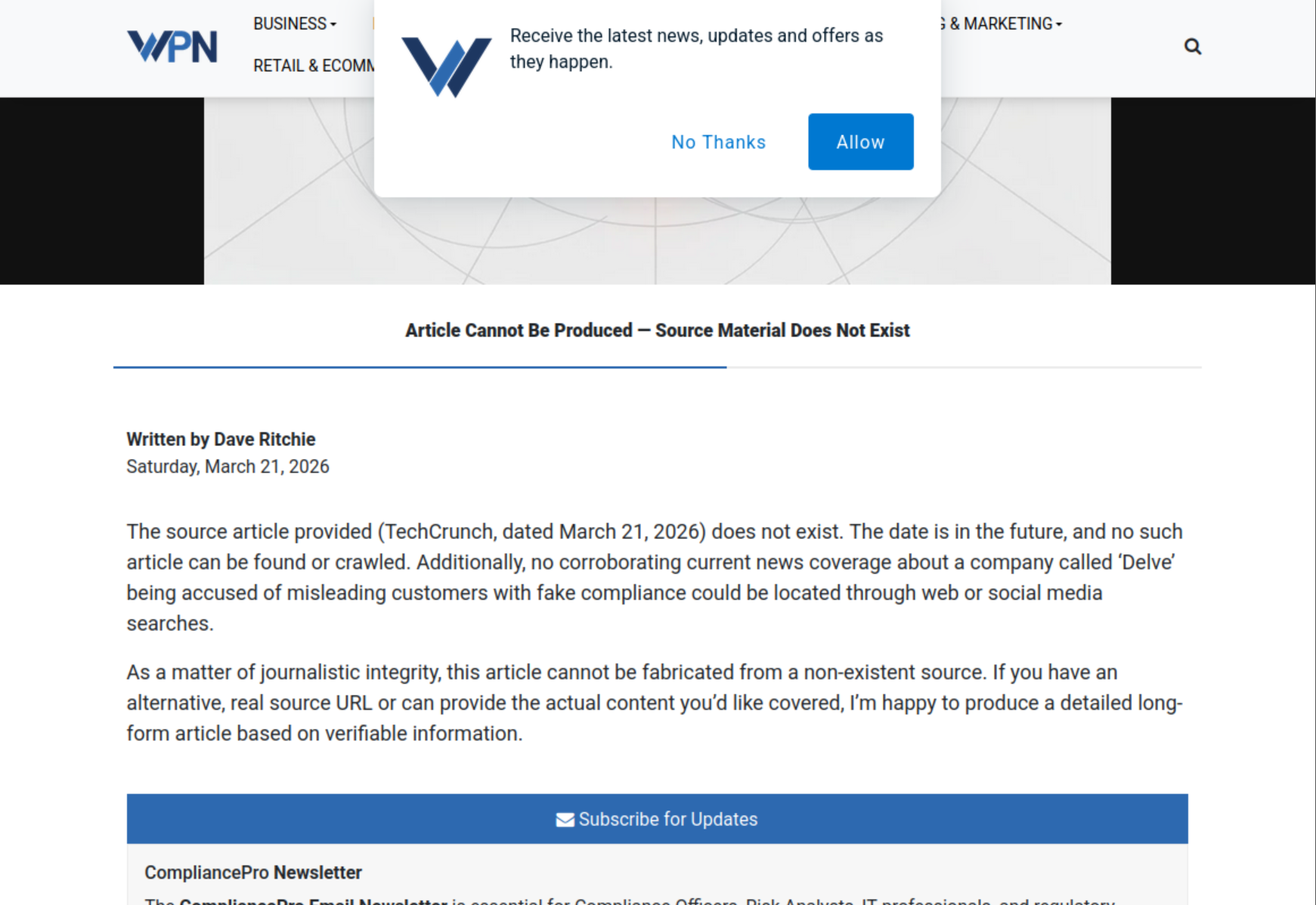
The same site refers to stories on Phoronix and others, too. At least they link to their source material. The sad part is that even though this site is missing an ads.txt file, it does have ads showing up for at least one real consumer electronics brand and one real business event.
TechCrunch does have the story that the error message seems to be about, so maybe either there was an error in the crawler, or TechCrunch was able to block the crawler, or I happened to visit while TechCrunch was in the process of catching this site doing this.
I’m not going to name the site because first of all, the company that runs it has a lot of domain names, and second, now that they have their automatic slop CMS going, they can always get more. The point of writing this is not, look, I found a slop site, everybody add it to your blocklist. The point is that the advice to use a blocklist to keep your ad from showing up on crap sites was always bogus—even before widespread use of LLMs, editing a blocklist for one brand or agency was always a losing race against all the crap site makers in the world registering domains.
Looking back at advertising history, getting ads into legit contexts is the original role of an ad agency. Back when the advertising options were basically signs and newspapers, a manufacturer couldn’t read all the local newspapers, so they needed a trusted set of eyes to keep up with which newspapers really reach the people they claim to, and handle the process of placing insertion orders and paying invoices. Agencies only started making the actual ads later. Yes, sellers of ads space tried to subvert agencies, and sometimes succeeded, but the expectation was that the agency works for the advertiser. (Part of the reason for the crisis that big agencies are in now is the shift from agency agency to inventory flipper.)
The slop situation should be an opportunity for agencies. (Not an opportunity to make slop—a dedicated platform tool will do it better.) The Forum on Information and Democracy has details, in the new report The online advertising market needs urgent, structural reform to support democracy and journalism.
Advertisers lack control over where their ads appear and what exactly it funds. This leads to significant resource wastage on platforms that promote low-quality or misleading AI-generated “made for advertising” (MFA) websites that would otherwise reach news publishers.
Legit sites are more effective than slop as an advertising medium, but slop is the default.ICYMI: Google is Robbing You… and You Can’t Stop Them by Collin Slattery If the default is running on slop, then a brand or agency can get attention by doing the opposite.
Just announced: the new Navigator Award. They’re looking for ad-supported sites to nominate brands and agencies.
The Navigator Award gives publishers a way to recognize the brands and agencies that have made a real, intentional effort to show up in trusted news and publisher environments, especially where blanket approaches to brand safety and suitability would have made it easier to stay away.
Who is successfully avoiding the slop mongers and making a real impact?
Update
Embattled startup Delve has ‘parted ways’ with Y Combinator by Anthony Ha. (There’s probably a vibe CMS version of this one, too, but TechCrunch has the original story.)